





 Contact Support
 Track Your Order


If you want to look sharp, get a good watch.
Nothing says more about a man's style than what he wears on his wrist. A watch beats every other accessory, hands down.
When you know your stuff about watches, shopping gets easier. You spot quality. You avoid buyer's remorse. You pick pieces that actually match your wardrobe.
This guide breaks down watch mechanisms, materials, and smart buying tips. We'll cover luxury options too. You'll learn what types of watch styles work with what you wear.
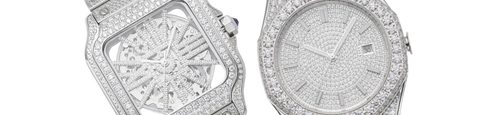
You can check out our amazing moissanite watch collection.
Types of Watches by Movement
Think of the movement as your watch's heart, as it keeps everything ticking. Watches run on three types: quartz, mechanical, or automatic. The movement affects how accurate your watch is, when it needs care, and what it's worth.
Most styles of watches use 17 jewels. These are tiny ruby bearings that cut down friction. Some fancy watches also pack 21 or 23 jewels, as more jewels mean smoother operation for better timekeeping
1. Mechanical Watches

A mechanical watch is powered by a battery or an electronic system. The mainspring slowly releases its energy through an escapement. It is regulated by an oscillating balance wheel. It is one of the most common wrist watch styles out there.
The time you see on a mechanical watch is the result of 130+ well-thought-out components. Key instruments of them are the mainspring barrel, centre, third, and fourth wheels. Plus, the escape wheel aids in flowing the energy that comes from the mainspring.
2. Automatic Watches

Automatic watches have an extra internal rotor. This metal weight spins with the natural motion of the wearer’s wrist. If the watch is taken off, it will keep running for its power reserve before stopping for up to 72 hours.
IceCartel’s luxury 14K rose gold watches offer an automatic and outstanding movement mechanism.
3. Quartz Watches

Quartz watches offer reasonable pricing among other watches. It is considered the most accurate compared to other mechanical watches. A standard quality quartz typically gains or loses only 15 seconds within 30 days.
For powering up, it uses a battery, which has a quartz crystal. The battery supply current generates a high-frequency vibration (32,768 times per second).
The second hand translates this into one-second steps. They require just a battery change every 2-3 years.
4. Solar-powered Watches

Solar-powered watches are eco-friendly as they don’t need frequent battery replacement. They have a cell that converts sunlight or artificial power sources into electrical energy.
The power is also stored in the rechargeable battery most of the time. A fully charged solar watch can run for months, even when stored in total darkness.
5. Kinetic Watches

The kinetic watches are an amazing blend of mechanical and quartz technology. It has a manual rotor that generates electricity from wrist motion. The converted electricity, then stored and used to power a quartz crystal oscillator.
This stored energy also powers up its entire integrated circuit. Moreover, a kinetic watch has a self-winding feature similar to other automatic watches.
Types of Watches by Display
The display types are divided into two key categories: analog and digital. Few watches are composed of a hybrid mechanism.
Each type offers certain display benefits, suited for different environments. Let’s know about them below.
6. Analog Watches

Analog watches display time using hands moving across a circular dial. The dial is marked with numerals or indices. This is the oldest and most traditional format of watch display.
Analogue displays offer superior readability at a glance. They are universally associated with classic horology.
They appear more elegant in formal, professional, and luxury settings. Their design allows them to integrate complex mechanical movements.


Its clear, symmetrical display offers a classic analog vibe with a high-end casing. Whether you are carrying a formal to casual style, this elegant piece easily draws the attention of others.
7. Digital Watches

Digital watches display the time directly using numerals. The timeframe typically employs a 24-hour or 12-hour format. They revolutionized timekeeping by offering extremely precise readout capabilities.
Digital displays are primarily identified by their technology:
LED (Light-Emitting Diode): The LED system requires a button push, which helps to light up. Uses small bulbs to reflect the numbers and typically consumes more power.
LCD (Liquid Crystal Display): LCD watches block light by using crystals. This mechanism allows you to read the time more easily. On the other hand, a very small portion of the battery power is spent to run the watch.
Digital watches are excellent for precision timing. They are ideal for sportspersons and athletes. These pieces come in handy for complex calculation displays like tide charts or altimeters. Additionally, their rugged build is favourable for the military field.
8. Hybrid Watches

A hybrid watch operates with a combined approach of analog display with a digital function. The display uses physical hands, and the LCD screen shows the date, stopwatch, or world time.
In some cases, such types of watches have built-in Bluetooth, a smart chip, and multiple sensors. They offer the best of both watch types. You will get a quick time reading and also relevant digital data.
9. High-contrast, Low-vision Watches

These specialized types of watches prioritize maximum clarity.
They come with features like:
High-Contrast Dials: Dials have bright white hands and indices. Both are set against a deep black dial. Typically, these watches have oversized numerals for ease of reading.
Braille Features: Raised markings and hinged crystals to allow the user to read the time by touch. Highly efficient for those who have lost eyesight or are in a low vision situation.
Types of Watches by Style
Watches play a significant role for men as a fashion accessory. You can choose your watch type based on the kind of outfit you prefer. This strategy makes your personal styling effortless.
10. Dress Watches

This is the most underplayed form of elegance. These certain types of watches are highly valued due to aiding a personalized style signature with formal attire.
Key attributes of dress watches include easy-to-slide slim cases, a polished metal finish, and a basic leather strap. The entire design emphasizes flexibility over luxury. Such watches complement your everyday shirts, casual fit outerwear, and uniforms.
11. Casual and Everyday Watches

This category can be referred to as the daily wear, yet they look attractive with formal attire most of the time.
Your everyday work demands a highly functional, rugged mechanical companion, and this category gives you the best options. Traditionally, they are made of delicate features, easy closure, and an uncluttered dial.
12. Fashion Watches

Fashion watches depend on trends or themes to match the relevant pop fashion aesthetic. Such as a Ben 10 or Superman-themed watch. They are valued over their brand and seasonal alignment with style.
13. Luxury Watches

Luxury pieces are design-focused timekeepers. It's all about their details, finishing quality, and unique horology mechanism. Furthermore, they use expensive materials like gold, diamond, platinum, and more.
They are here to create a contrast that balances your accessory. You can also carry them as a bold statement piece at special events.
14. Skeleton Watches

As its name suggests, such a category displays the entire watch anatomy. A skeleton watch exposes the gears, dials, mainspring, and other parts. Overall, this is a visually appealing kinetic art exhibition of mechanical engineering.


15. Pocket Watches

These types of watches are designed to be carried in your waistcoat’s pocket. Traditionally, they are powered by a mainspring to follow quartz movement for timekeeping.
Classic pocket watches have a built-in compass and a metal cover to ensure display protection. The feature includes a fob chain.
Types of Watches by Functions
Even though modern watches include all generic functions like calendar, alarm, and timezones, vintage watches excel in one specific function.
Let’s take a look at the most common watch types based on functions.
16. Chronograph Watches

Chronograph watches have a total mechanism integrated into them for movement.. It lets the wearer detect intervals independently of elapsed time on the main display.
It also works with a pusher and a timing mechanism. Depending on the pusher configuration and functionality, there are 4 types of chronographs and 4 styles of pushers as well.
One pusher starts and stops the timing function while the other resets the hand to zero. The elapsed seconds are tracked by a central sweep hand with subdials. Both record the elapsed minutes and hours.
Advanced Chronographs
Flyback: The timer instantly resets to zero and restarts with a single push. Crucial for pilots to get a quick navigation of the successive legs of a flight.
Split-Seconds (Rattrapante): This chronograph features two central second hands for timing. They separate two events simultaneously. While the main race time continues, it records lap times.
17. Calendar Watches

Such types of watches are mechanically programmed to track the day, month, and annual calendar accurately.
Annual calendar: This category is programmed to display the annual time and date, beyond the day of the month. Designed with significant mechanical memory. Requires a manual correction once per year, at the end of February. As it can’t calculate the leap year cycle.
Perpetual calendar: Unlike an annual one, the gears of this watch follow a cycle of 1,461 days. This program enables them to show the 28, 30, or 31 days of a certain month. Even, can track leap years. This watch calendar barely loses track. Many of this type can operate until the year 2100.
18. GMT & Travel Watches

Anyone who travels regularly, both GMT and Travel types of watches come in handy. GMT watches follow a 24-hour timeframe, and Travel types include different time zones.
The world time watch shows the exact time of the major global cities. This table explains their key differences in detail:
Feature |
GMT (Greenwich Mean Time) Watch |
World Timer Watch |
Function |
To track two or three local time zones simultaneously. |
To display the time in all 24 major time zones |
Time Zones |
2 or 3 |
24 major cities. |
Display Mechanism |
Uses an additional 24-hour hand, either on the bezel or a separate ring on the dial. |
Uses a central city ring with 24 city names. A 24-hour disc indicates the day and night. It rotates around the dial. |
Best Suited For |
The frequent traveller who mainly needs to track the new local time. |
You can see the time in major cities instantly. |
19. Moonphase Watches

If intercontinental sailing is your thing, these types of watches became a lifesaver. Moonphase watches display the phase of the moon as per Earth's nature. Often decorated with two moons and stars, the wearer could read the phase through a crescent-shaped aperture on the dial.
20. Alarm Watches

An alarm watch is a classic timepiece featuring either a mechanical or quartz mechanism. The user sets the alarm, which later triggers an audible chime at the chosen time. Historically, it was a powerful mechanical device for reminders before the digital age.
Types of Sports and Professional Watches
Watches became a helpful tool during the Second World War. This instrument assisted the pilots in a coordinated attack strategy. Later, this produced a variety of offspring, customized for specific professional needs.
21. Dive Watches

For underwater activities, this watch is like a lifeline.
ISO Standards for Dive Watches: Dive watches must pass all the criteria of the ISO 6425 standards. They must have a high resistance to magnetism and shock.
Water Resistance: The watches need to survive underwater pressure. Old models can support at least 100 meters.
The key feature of dive watches is the unidirectional rotating bezel. It prevents the diver from miscalculating time. It’s non-negotiable to keep a safe breathing rhythm for divers.
22. Pilot Watches

These watches trace back to the beginning of history, when pilots needed a giant dial for a quick reading.
Historically, they have an oversized crown to adjust easily for pilots wearing gloves. Additionally, they have large cases, high-contrast black dials with huge luminous numbers.
The overall design of pilot watches emphasizes extreme legibility. Modern versions also include GMT or chronograph functions for cross-time-zone travel and navigation.
23. Field and Military Watches

These types of watches were built for the field with a rugged structure to match the high-intensity activities during World War I. Field watches were developed for ground troops to read time at a glance. Military watches are slightly different, designed for any branch of the armed forces, including the navy and the airforce.
Here are the key differences between them:
Feature |
Field watch |
Military watch |
Design |
Bigger display, bulk case, sturdy build. |
Built for a specific military role (diving, navigational, etc.) |
Dial |
Usually black dial, with white numerals. Features full 12-hour Arabic numerals and an inner 24-hour scale as per military scale. |
Have simpler dials with chronograph subdials, compasses, or altimeters. |
Complications |
Minimal, and often have a hacking seconds feature. |
Has specialized complications like: chronograph, rotating bezel, GMT, or altimeter. |
Case Finish and Straps |
Reflection prevention; use matte, sandblasted, or brushed finish to hide soldiers' location. |
Can be steel, titanium, or high-tech composite/resin. |
Water Resistance |
It can prevent water to some extent. |
Can range from 100m to 200m or 300m+ |
24. Racing & Chrono Sports Watches

This category is strongly linked to precise time-focused sports. Mostly used to count down during sports such as motor racing. These types of watches were favoured by fans and drivers for easy time laps and speed measuring ability.
25. Nurse Watches

Medical professionals have a very specific watch for their demanding environment.
The most crucial feature is a highly visible, red-colored second hand. It comes with a pulsometer scale on the dial. This aids in measuring a patient's pulse and respiratory rate quickly. Nurse timers are also usually waterproof and have easy-to-clean cases and bands.
Types of Smart and Modern Watches
The newest category of digital timepieces. You can connect, track, and communicate with the help of a smartwatch or a modern one.
26. Smartwatches

Smartwatches are like your hand computers. They handle daily tasks, show notifications, and perform payments. Some of them even have media access like your smartphone.
A traditional watch basically uses mechanical or quartz movement. whereas a smartwatch is backed by a microprocessor with an operating system and a battery, very similar to the mobile phone you use.
Key Function |
Smartwatch |
Traditional Watch |
Movement |
Relies on a microprocessor, an operating system, and a battery. |
Relies on automatic/Manual-Wind or Battery-powered quartz crystal. |
Display & Features |
Digital LED/LCD screen. Has health tracking, notifications, mobile payments, apps, calls, and GPS navigation. |
Includes basic time features like date, day, chronograph, moonphase, or alarm. |
Longevity |
Lasts 1-3 years. |
Built to last for generations. |
Maintenance |
Require regular software updates. |
Requires simple battery replacement |
27. Fitness and Health Watches

Fitness watches primarily focus on tracking exercise and vital signs (steps or heart rate).
Although many smartwatches include fitness features, a fitness watch can offer more health tracking metrics like heart rate, number of steps, blood pressure, etc. They usually have longer battery life and specialized sensors.
These types of watches have fewer smart features compared to smartwatches. Because their core job is to track fitness-related metrics.
28. Hybrid Smartwatches

Hybrid smartwatches have a traditional analog outlook, but come with a few modern digital features like responding to calls, sending texts, setting up reminders, etc. You’ll also find hands and a physical dial in hybrid smartwatches.
Hybrid smart watches often use a quartz movement like analogue timepieces. However, it includes a few smart features like step counting and sleep tracking. All of these are performed without a power-hungry digital screen.
Rare, Advanced, & Luxury Watches
This one has the most visually stunning watchmaking with rare complications. These are considered high-end watches for expensive metal and gemstone use.
29. Tourbillon Watches

This symbol of magnificent watchmaking was developed 200 years ago. Its original purpose was to increase accuracy in time telling. It could also counter the negative effects of gravity on the escapement (the regulating mechanism) of a mechanical watch.
30. Minute Repeater Watches

A minute repeater watch is one of the most difficult and expensive complications to create, prized for its sound.
This complication is activated with a slider or pusher by using tiny internal hammers and gongs.
The mechanism triggers the chime, which rings the hours, then the quarters, and finally the minutes. This timeless piece can become an essential miniature mechanical clock chime on your wrist.
31. Chiming and Sonnerie Watches

These watches are related to the minute repeater, but they can chime automatically. These timepieces automatically chime or sound the time.
A Grand Sonnerie chimes the hours and quarters automatically every quarter hour. Whereas a Petite Sonnerie only chimes the quarters when activated and the hours on the hour.
32. Regulator Watches
The regulator is a unique and historical way of displaying the time that separates the hour, minute, and second hands. The minute hand serves as the key central hand. The hour hand and second hand are both placed on two separate, smaller sub-dials.
Types of Watches by Material
With the advancement of mechanical engineering, we can now see that diverse metals are being used to create different watch parts. These metals offer a premium look, durability, and timeless shine that often lasts for generations.
33. Stainless Steal Watches

Stainless steel is tough, and has high corrosion resistance. It is a good option that you see very often. The material is used to make almost every type of watch. From dive watches to casual timekeepers, it offers sustainable quality for its price.
34. Gold & Precious Metal Watches

This watch category focuses on expensive or rare metals and different gemstone options. Traditional luxury watchmakers mostly prefer gold for the outer case. Some luxury watches are also iced-out with diamonds or moissanite. They are typically expensive and rare.


35. Ceramic Watches

Ceramic is used in high-tech watchmaking. It’s incredibly hard, lightweight, and hypoallergenic. While it has a highly scratch-resistant ability, it can crack or break if it gets hit hard enough.
36. Wooden Watches

Those who prefer eco-friendly options, wood watches' natural aesthetic is the ultimate choice. They are amazing looking and give you a very cool, fashionable look.
37. Titanium Watches

Titanium is a trustworthy metal even applied in aerospace instruments. It offers incredibly lightweight watches, even harder than steel. Its signature gray shade and hypoallergenic nature establish it as the best men’s accessories duo.
Types of Watches for Different People
It’s crucial to address individuals' needs and age-dependent activities while purchasing one. Let’s see different types of watches for specific manoeuvres.
38. Men's Watches

Commonly, men’s watches are heavier and focus on functional complications. They often include chronographs and dive bezels.
39. Women's Watches

Watches for women are traditionally composed of lightweight metal and soft bands, with a bright case. Those are often carved with floral designs to show feminine attributes. Women’s watches are preferred as a fashion accessory, instead of hand jewelry.
40. Unisex Watches

Such types of watches are designed for regular wear with common features. Typically, they come in the mid-size range( 36mm to 40mm).
41. Watches for Seniors

Elders need comfortable, easy-to-read wristwatches that serve multiple functions. Features like- health tracker and quick calling help them to move safely. In this case, hybrid and smartwatches offer maximum flexibility considering their age.
42. Watches for Kids

Kids' playful nature demands durable, fun, and easy-to-read watches. Their watches are brightly colored and made of safe resin or plastic. Usually, children’s watches run on quartz movements to be low-maintenance and shock-resistant.
Final Words
In terms of choosing a luxury watch, a quality mechanism comes first. Your watch is not only a personal style signature, but it's also your asset. Recognizing the key metrics of different types of watches is a smart move to win.
When it comes to durability and personal comfort, IceCartel offers them all. We offer genuine metals and exclusive watchmaking that you can put trust in. To make luxury watches more affordable, our moissanite watches offer unmatched quality.
Frequently Asked Questions
What are the types of watches?
Watch types are defined in three main categories:
By Movement: Quartz, Automatic, Mechanical, Solar, or Kinetic.
By Style: Dress, Casual, Luxury, Skeleton, or Fashion.
By Function: Dive, Pilot, Chronograph, GMT, or Smartwatch
What are the Big 5 watch brands?
Patek Philippe, Vacheron Constantin, Audemars Piguet, Breguet, and Lange & Söhne (German)
What are the different grades of watches?
These 4 standards indicate the build quality of a watch: Consumer Grade, entry-level luxury, luxury grade, and high horology.
What is the most popular watch type?
Currently, stainless steel sports watches are the most globally favourite. They offer high durability, smooth polish, and customized weights that fit anyone.
What is a non-quartz watch called?
Non-quartz watches are referred to as mechanical watches. They use a complex wound mainspring-powered gear system.

Joosep Seitam
Joosep was born in Tallinn, Estonia - a small country in northern Europe. He is an entrepreneur and one of the co-founders of Icecartel. Joosep has been in the jewelry industry since 2019, the year when he started the brand from scratch. During these years, Joosep has learned everything there is about the jewelry industry and he's here to share it all!