








 Contact Support
 Track Your Order


The history of lab-grown diamonds didn’t start when they first hit the jewelry stores; rather, it started a long time ago. Scientists have wondered for centuries if diamonds, which are formed naturally deep inside the Earth, could be recreated in a laboratory. And early such experiments date back to the late 18th and 19th centuries.
However, the first real breakthrough came in 1954, when researchers at General Electric successfully created the first reproducible synthetic diamond. In doing so, they used a high-pressure, high-temperature (HPHT) process developed by chemist Howard Tracy Hall.
Initially, these diamonds were tiny and used mainly for industrial tools and abrasives, not jewelry. Over the next decades, technological advancements like chemical vapor deposition made it possible to produce larger, gem-quality stones.
A scientific experiment thus evolved into a global jewelry revolution, which has reshaped the production, market, and purchasing trends of diamonds. We’ll look further into the history of lab-grown diamonds throughout this article.
Complete Timeline Summary (1870–2026)

Here is a timeline summary highlighting key scientific and commercial milestones, which shaped the lab-grown diamond industry.
1879 – Early Carbon Compression Experiments
Scottish chemist James Ballantyne Hannay reported producing microscopic artificial diamonds by heating carbon with iron inside sealed tubes under pressure.
While later experiments questioned reproducibility, it remains one of the earliest documented attempts to synthesize diamonds.
1893 – Additional High-Pressure Diamond Experiments
French chemist Henri Moissan attempted to form diamonds by rapidly cooling molten iron saturated with carbon in an electric arc furnace.
His results were later debated, but the work advanced research into high-pressure diamond formation.
1954 – First Reproducible Synthetic Diamond
Scientists at General Electric successfully created the first reproducible lab-grown diamond using the HPHT process under Project Superpressure.
This marked the true birth of modern synthetic diamond production.
1960s–1970s: Industrial Diamond Expansion
The Soviet Union scaled large-volume synthetic diamond production for cutting tools, drilling equipment, and abrasives, making lab diamonds essential in manufacturing and engineering industries.
1980s–1990s: CVD Diamond Breakthroughs
Researchers refined Chemical Vapor Deposition (CVD) methods, enabling controlled diamond growth in plasma chambers. This technology allowed larger, clearer crystals, eventually making gem-quality lab diamonds possible.
Early 2000s: First Commercial Gem-Quality Lab Diamonds
Companies like Apollo Diamond began selling the first commercially available CVD-grown gem-quality diamonds, marking the transition from purely industrial applications to jewelry markets.
2015: Mainstream Retail Adoption Begins
Growing production capacity and lower prices helped lab diamonds enter major jewelry retailers and online marketplaces.
Consumer awareness and certification from the Gemological Institute of America further boosted trust.
2018: Major Industry Disruption
De Beers launched its lab-grown diamond brand Lightbox Jewelry, selling standardized stones at significantly lower prices, accelerating mainstream awareness of lab-grown diamonds.
2020–2026: Rapid Market Growth and Global Adoption
Lab-grown diamonds now represent around 15–20% of global diamond jewelry sales by unit volume, driven by falling production costs and rising consumer demand for transparent pricing.
What Are Lab-Grown Diamonds?

Lab-grown diamonds are also known as man-made diamonds. And in terms of chemical properties, they are absolutely identical to natural diamonds.
You may wonder if lab-grown diamonds are even real. The answer is – Yes, they are real. These diamonds are real diamonds created in a laboratory rather than formed naturally inside the Earth. In addition to their pure carbon-based composition, lab-grown diamonds have the same crystal structure and physical properties as natural diamonds.
At the same time, both natural and lab-grown diamonds share the same crystallography. Both kinds of diamonds have carbon atoms arranged in a cubic crystal lattice, which we know as the crystal structure of diamond. This is what gives diamonds their exceptional hardness, brilliance, and thermal conductivity.
The only real difference is how they are formed. Natural diamonds develop over billions of years deep in the earth under extreme pressure and heat. Meanwhile, lab-grown diamonds are produced in controlled environments using technologies such as:
HPHT (High Pressure High Temperature) – It replicates the natural geological conditions of diamond formation.
CVD (Chemical Vapor Deposition) – It grows diamonds layer by layer from carbon-rich gas in a vacuum chamber.
Since their properties are identical, major gemological institutes like the GIA classify lab-grown diamonds as genuine diamonds, not imitations.
Why the Term “Synthetic Diamond” Is Often Misunderstood
Lab-grown diamonds are sometimes called “synthetic diamonds”. This scientific term simply refers to something that’s human-made, not natural. However, this terminology often causes confusion among consumers.
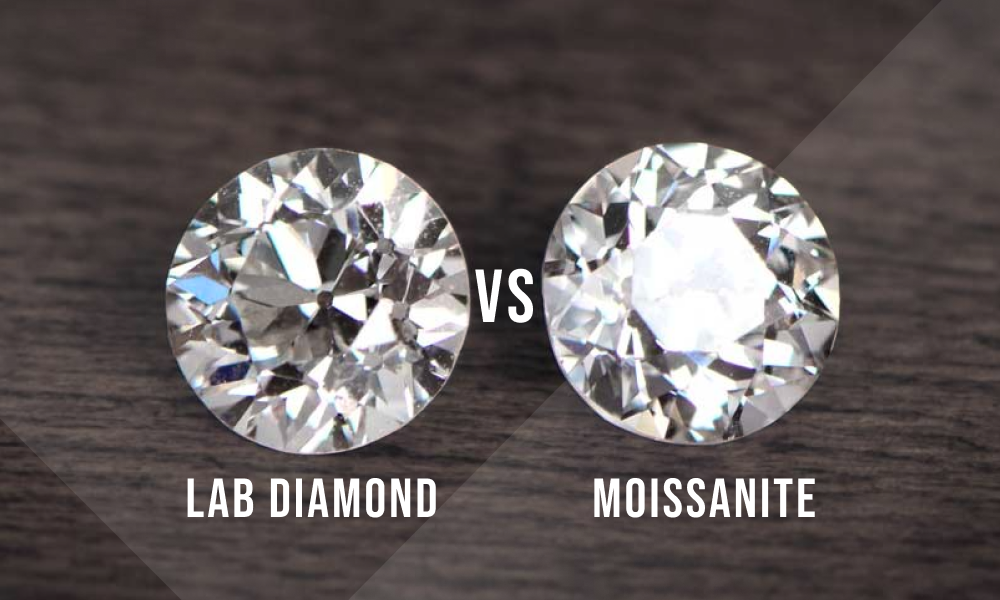
Many people assume “synthetic” means fake or imitation. But that’s not true. Lab-grown diamonds are not substitutes like cubic zirconia or moissanite. Those materials look similar but have different chemical compositions and crystal structures.
As per thedefinitions of gemological authorities-
Lab-grown diamonds: These are real diamonds with the same carbon structure.
Simulants (e.g., cubic zirconia): These are other materials designed only to resemble diamonds.
To prevent such confusion, many organizations, including GIA, prefer the term “laboratory-grown diamonds.”
Early Scientific Attempts to Create Diamonds (1870–1953)
Scientists have long tried to recreate diamonds in laboratories. Due to carbon being arranged in a specific crystal structure in diamonds, researchers believed it might be possible to artificially replicate the process.
However, early experiments faced serious technological limitations.
19th Century Experiments
The late 19th century saw some of the first serious attempts to create artificial diamonds.
1879: Scottish chemist James Ballantyne Hannay reported that he had produced microscopic diamonds. He claimed to have done so by heating hydrocarbons and iron inside sealed tubes under high pressure. His results were controversial and difficult to reproduce.
1893: French chemist Henri Moissan dissolved carbon in molten iron and cooled it rapidly in an attempt to create diamonds. Moissan believed this process mimicked the natural conditions inside the Earth.
Although Moissan later won the Nobel Prize in Chemistry for unrelated work, his diamond synthesis claims were never fully verified by later scientists.
Why Early Attempts Failed
Despite potential works, most early attempts to create diamonds failed. That was mainly due to technological challenges, like-
Insufficient pressure: Natural diamonds form at pressures above 5–6 gigapascals deep within the Earth's mantle. Early laboratory equipment could not manage to reach these levels.
Temperature control problems: Temperatures above 1,300–1,600°C are required toform diamonds. These were difficult to maintain precisely in 19th-century experiments.
Lack of verification tools: Scientists at the time had limited microscopic and spectroscopic tools to confirm whether the crystals they created were truly diamonds.
Because of these limitations, researchers spent decades refining high-pressure equipment before a reliable method was discovered.
The 1954 Breakthrough – The Birth of Modern Lab Diamonds
Researchers at General Electric in the US managed to create the first scientifically confirmed lab-grown diamonds in 1954. That was the beginning of modern synthetic diamond production.
Project Superpressure and the GE Breakthrough
The breakthrough came from a research initiative called Project Superpressure, led by scientists including Howard Tracy Hall. Hall successfully produced the first reproducible synthetic diamond crystals on December 16, 1954. He used a specially designed high-pressure press for the process.
The results were later published in the journal Nature. They confirmed that diamonds could be manufactured artificially under controlled conditions.
What Is HPHT (High Pressure High Temperature)?
The process used by General Electric is known as HPHT (High Pressure High Temperature).
In this method-
A carbon source (often graphite) is placed inside a press
The chamber is subjected to pressures of about 5–6 GPa and temperatures above 1,400°C
Carbon atoms rearrange themselves into the diamond crystal lattice
Then the diamond is formed
HPHT replicates the natural environment where diamonds form inside the Earth’s mantle.
Why the First Diamonds Were Industrial-Grade Only
The earliest lab-grown diamonds were not perfect. They were also very small. So, they were not suitable for jewelry. Instead, they became valuable for industrial applications.
Industries began using synthetic diamonds for-
Cutting tools
Drilling equipment
Grinding wheels
Polishing and abrasives
Diamonds are the hardest known natural material, so even tiny crystals are extremely useful for manufacturing and engineering.
After 1954, for several decades, industrial demand drove the growth of the synthetic diamond industry, not jewelry.
The Cold War Diamond Race (1960s–1980s)
Following the General Electric breakthrough, synthetic diamond technology became strategically important.
During the Cold War, both Western and Soviet scientists invested heavily in diamond production, as industrial diamonds were essential for machining metals, drilling, and military manufacturing.
Soviet Advancements in Diamond Synthesis
The Soviet Union rapidly expanded its own synthetic diamond program in the late 1950s and 1960s. The country focused on large-scale industrial production. Soviet researchers improved high-pressure presses and developed more efficient diamond synthesis techniques. It allowed them to produce synthetic diamonds in significant quantities for industrial use.
By the 1960s, Soviet factories were producing large volumes of synthetic diamonds for cutting tools, mining drills, and precision manufacturing. These were critical for heavy industry and defense production. This expansion helped them reduce reliance on natural diamond imports, which were largely controlled by Western companies such as De Beers.
Soviet researchers also contributed to improvements in diamond crystal growth and pressure technology. It helped turn synthetic diamonds into a core material for advanced manufacturing during the Cold War era.
Expansion into Industrial Manufacturing
From the 1960s through the 1980s, synthetic diamonds became large-scale industrial materials.
Industries began using synthetic diamonds for:
Machining tools used in aerospace and automotive manufacturing
Mining and oil drilling equipment
Grinding and polishing abrasives for metals and ceramics
By the late 1970s and 1980s, synthetic diamonds were widely accepted as essential industrial materials. However, they were still too small and imperfect for use in jewelry.
The CVD Revolution: A Turning Point (1980s–2000s)
Although HPHT technology dominated early synthetic diamond production, another method, Chemical Vapor Deposition (CVD), began gaining attention in the 1980s.
This method changed how diamonds could be grown for both industrial and gem purposes, as it allowed scientists to precisely control the growth environment. This opened new possibilities for gem-quality diamonds.
What Is Chemical Vapor Deposition (CVD)?
The CVD process grows diamonds atom by atom from a carbon-rich gas, instead of compressing carbon under extreme pressure.
In a CVD system:
A small diamond seed crystal is placed in a vacuum chamber
Carbon-containing gases like methane are heated into plasma
Carbon atoms separate and gradually deposit onto the seed, forming diamond layers
Researchers began developing CVD diamonds in the 1980s. By the 1990s, the technology had improved enough to produce larger, higher-quality crystals.
Why CVD Changed the Jewelry Industry
The CVD process grows diamonds atom by atom from a carbon-rich gas, instead of compressing carbon under extreme pressure.
In a CVD system:
A small diamond seed crystal is placed in a vacuum chamber
Carbon-containing gases like methane are heated into plasma
Carbon atoms separate and gradually deposit onto the seed, forming diamond layers
Researchers began developing CVD diamonds in the 1980s. By the 1990s, the technology had improved enough to produce larger, higher-quality crystals.
Why CVD Changed the Jewelry Industry
CVD technology massively improved the potential of lab-grown diamonds for jewelry.
Key advantages included-
Better clarity: Fewer inclusions compared with early HPHT stones
Larger diamonds: Controlled growth allows bigger crystals suitable for gemstones
Color control: Producers can create colorless diamonds or adjust colors during the growth process
By the late 1990s and early 2000s, these improvements helped lab-grown diamonds turn into gem-quality stones suitable for jewelry markets.
HPHT vs CVD: Key Differences in Diamond Production

When Did Lab-Grown Diamonds Enter the Jewelry Market?
Lab-grown diamonds began to enter the jewelry market in the early 2000s. However, it became mainstream in the mid-to-late 2010s, as prices dropped significantly with the improvement of production technology.
Improvements in CVD diamond growth, better grading standards, and increased retail adoption played a role in this regard.
Early Commercial Attempts (2000–2014)
Attempts to sell gem-quality lab-grown diamonds as jewelry began in the early 2000s. In 2003, Apollo Diamond, which was a company based in Boston, announced the commercial production of CVD-grown colorless diamonds suitable for jewelry. This marked one of the first attempts to market lab diamonds directly to consumers.
During the late 2000s and early 2010s, companies such as Gemesis (now J2 Materials) produced HPHT-grown diamonds, often in yellow or fancy colors. Those were easier to grow at the time.
Early lab diamonds were still expensive and limited in size. So, adoption remained relatively small. However, improvements in CVD growth methods between 2010 and 2014 prompted the production of larger and clearer stones.
Mainstream Adoption (2015–Present)
Lab-grown diamonds entered the mainstream jewelry market around 2015. Several industry shifts played a role in that:
1. Rapid improvements in production technology
CVD and advanced HPHT techniques began producing high-quality colorless diamonds over 1 carat. These diamonds are suitable for engagement rings and fine jewelry.
2. Major price declines
By 2023–2024, lab-grown diamonds were typically 60–85% cheaper than natural diamonds of similar size and quality. The prices significantly dropped as manufacturing scaled up. In the early 2010s, the price gap was closer to 20–30%.
3. Entry of major industry players
A massive turning point came in 2018, when De Beers launched its lab-grown diamond brand Lightbox Jewelry.
Lightbox introduced a transparent pricing model of about $800 per carat. It helped normalize lab-grown diamonds as a commercial jewelry category. Consumer awareness also increased. However, De Beers has recently announced its intention to end the Lighbox permanently and commit to natural diamond jewelry instead.
Another major player in the lab-grown diamond jewelry industry is IceCartel. IceCartel have made moissanite diamonds massively popular with premium hip-hop jewelry collections. Loved by famous artists like Lil Pump, Lil Mosey, and BigXthaPlug, IceCartel is now the industry leader in the synthetic diamond jewelry industry.
4. Rapid retail adoption
Lab-grown diamonds gained prominence in engagement rings and online jewelry retail by the early 2020s. In 2023, these diamonds accounted for roughly 46% of engagement ring center stones sold in the US.
The category’s growth is largely owed to millennial and Gen Z buyers, as they are more open to alternative diamond sources.
How Consumer Perception Changed Over Time

Public perception of lab-grown diamonds has shifted significantly over the past two decades. Early skepticism about their authenticity has faded, and they are now a lot more accepted.
Ethical debates, environmental discussions, and improved transparency in pricing have contributed to that.
Now, many consumers see lab-grown diamonds as a legit alternative to mined stones, not as a novelty product.
Ethical Debate vs Mined Diamonds
Ethical debate surrounding traditional diamond mining is one of the major factors behind a shift in perceptions. Concerns regarding conflict diamonds, labor conditions, and mining practices pushed many to explore alternatives.
The diamond industry addressed many of these concerns through initiatives like the Kimberley Process Certification Scheme. It was launched in 2003 to prevent conflict diamonds from entering global supply chains.
Lab-grown diamonds entered this conversation as a controlled and traceable alternative. However, experts caution that ethical comparisons should remain balanced, as many modern diamond mines now follow strict environmental and labor regulations. This means the ethical difference can vary depending on the specific source.
Environmental Lifecycle Comparison
Environmental impact is another major issue. Mining natural diamonds requires large-scale excavation, water usage, and energy consumption. Meanwhile, lab-grown diamonds require significant electricity to power growth reactors.
According to a lifecycle assessment published by the Diamond Producers Association, producing a one-carat natural diamond emits about 160 kg of Carbon Dioxide on average.
By comparison, a lifecycle study by Sphera Solutions estimated that lab-grown diamonds can emit between 20–60 kg of CO₂ per carat, depending on the energy source used during production.
However, researchers emphasize that environmental impacts vary widely depending on energy sources, mining methods, and production technology, making blanket claims about sustainability difficult.
Pricing Transparency & Market Disruption
Pricing transparency has also contributed to changing consumer attitudes.
Historically, complex supply chains and controlled distribution networks have influenced the prices of natural diamonds. Lab-grown diamonds disrupted this model by introducing more transparent pricing tied to manufacturing costs.
Industry research from Bain & Company shows that lab-grown diamonds typically cost 60–85% less than comparable natural diamonds. This is largely due to scalable production technology.
This price difference, alongside clear grading reports and online availability, has helped normalize lab-grown diamonds more, particularly among young buyers.
Certification and Legitimization
To gain widespread acceptance, lab-grown diamonds needed the same scientific grading and certification standards as natural diamonds.
And major gemological institutions began developing grading systems specifically for lab-grown stones over time.
When Did Major Gem Labs Start Certifying Lab Diamonds?
The Gemological Institute of America (GIA) began formally issuing grading reports for lab-grown diamonds in 2007.
Initially, these reports used descriptive terms like “synthetic diamond”. However, in 2019, GIA updated its terminology to use “laboratory-grown diamond” to improve clarity and reduce consumer confusion.
Other leading laboratories, including International Gemological Institute (IGI) and HRD Antwerp, also began certifying lab-grown diamonds. This helped standardize quality grading across the industry.
How Certification Increased Consumer Trust
Certification played a crucial role in legitimizing lab-grown diamonds.
A diamond grading report verifies-
Carat weight
Color
Clarity
Cut quality
Growth method (HPHT or CVD)
These reports allow buyers to compare lab-grown and natural diamonds using the same “4Cs” grading system. It improved transparency significantly.
According to the GIA, providing standardized grading reports ensures that lab-grown diamonds are evaluated using the same gemological principles as natural diamonds. This, in turn, strengthens consumer confidence in the category.
Market Growth and Industry Statistics

What started as a niche scientific innovation has now transformed into a rapidly expanding global market.
Over the past decade, lab-grown diamonds’ market share has increased significantly due to improvements in production technology, falling prices, and rising acceptance.
Here’s how the industry has grown-
Market Share Over the Decades
Lab-grown diamonds have gradually captured a larger share of the global diamond market.
2015: Lab-grown diamonds accounted for ~1% of global diamond sales, as gem-quality stones were still limited and expensive.
2018: Market share increased to about 2% of global diamond jewelry sales.
2022: Global lab-grown diamond sales approached $12 billion.
2023: The lab-grown diamond market reached roughly $25–26 billion in global value, with strong demand in the US and Asia. These diamonds accounted for ~18% of global diamond jewelry sales value, highlighting a major shift in the industry.
2024: In the engagement ring segment, about 52% of center stones were lab-grown. It reflected particularly strong adoption among younger buyers.
These numbers show how lab-grown diamonds moved from a scientific curiosity in the early 2000s to a significant portion of the global jewelry market within two decades.
Price Trends: Then vs Now
One of the biggest factors in the increased adoption has been the dramatic change in pricing.
Around 2015, lab-grown diamonds were typically only about 10% cheaper than natural diamonds due to limited production.
By 2024, lab-grown diamonds were often sold at 80–90% lower prices than comparable mined diamonds, due to technological advancements and competition among producers.
The average price of a 1-carat lab-grown diamond fell to around $2,300 in 2024. This price shift allowed buyers to purchase larger or higher-quality stones for the same budget.
Retail & E-Commerce Adoption
Retail adoption, particularly online, has also highly increased. Major jewelry brands and online retailers have expanded lab-grown diamond offerings in recent years.
Global production reached about 7 million carats in 2023, reflecting strong supply growth. The number of companies producing lab-grown diamonds globally has expanded to 200+ manufacturers.
In the United States alone, lab-grown diamond jewelry sales exceeded $1 billion in 2022, driven largely by millennial and Gen Z consumers.
Lab-Grown Diamonds Today: 2020–2026 Landscape
The past five years have been particularly crucial. In this period, lab-grown diamonds have grown beyond a niche alternative and turned into a major segment in jewelry.
Apart from tech and supply chain advancements, broader acceptance from consumers and luxury brands has accelerated adoption worldwide.
Market forecasts estimate the market to reach around $29–33 billion in the 2025–2026 fiscal year, and projections suggest it could surpass $90 billion by 2034 as demand continues to grow.
Technological innovation, evolving consumer values, and new business models have all played a role in this transformation.
Technological Advancements
Technological progress has been one of the most important drivers of the modern lab-grown diamond industry. Two primary production methods dominate the sector today-
High Pressure High Temperature (HPHT): It replicates the natural geological conditions that form diamonds.
Chemical Vapor Deposition (CVD): It grows diamond crystals layer by layer from carbon-rich gas in a controlled environment.
Recent developments have improved both the quality and efficiency of these processes. For example, AI-assisted monitoring systems are now used in diamond cultivation.
The AI helps with analyzing temperature, pressure, and crystal growth patterns to optimize production cycles and reduce defects.
These innovations allow manufacturers to grow gem-quality diamonds in weeks or months rather than billions of years.
At the same time, they get to maintain the same physical and chemical properties as natural diamonds during the production.
As a result, modern lab-grown diamonds can match mined diamonds in cut, clarity, and carat size. It has made them highly attractive for fine jewelry.
Production Scale Improvements
Another defining factor is the dramatic increase in production capacity.
Industry estimates show that global lab-grown diamond production rose from about 1 million carats in 2010 to over 9 million carats by 2023. This reflects a rapid scaling in manufacturing infrastructure.
Several factors contributed to this growth-
Expansion of manufacturing facilities in China and India
Falling equipment costs for CVD reactors
Improved yield rates and automation
Increased investment from technology and jewelry companies
Asia currently dominates the production ecosystem. China accounts for a large share of rough lab-grown diamond manufacturing. At the same time, India handles more than half of the global cutting and polishing operations.
These developments have enabled the industry to cater to rising demand while driving down production costs.
Luxury Brand Adoption
Gradual adoption by established jewelry brands and retailers has been one of the most significant signals of legitimacy for lab-grown diamonds.
Major companies are now incorporating lab-grown diamonds into their collections to appeal to younger and sustainability-focused consumers. Retailers also appreciate the advantages of-
Lower wholesale costs
Consistent supply
Traceable production origins
Consumer acceptance has also substantially increased. Surveys show that a growing portion of buyers, particularly millennials and Gen Zs, view lab-grown diamonds as a responsible alternative to mined stones, especially for engagement rings and everyday jewelry.
This increasing demand has prompted many jewelers to expand their product lines. Industry reports suggest that over one-third of jewelry retailers are increasing their lab-grown diamond offerings.
Sustainability messaging and affordability have turned lab-grown diamonds into a permanent feature of the contemporary jewelry landscape.
The Future of Lab-Grown Diamonds
Natural diamonds still dominate luxury perception, but industry analysts widely expect lab-grown diamonds to continue expanding due to price accessibility and changing consumer preferences.
Below is a balanced look at what the future may hold.
Market Projection Models
Several industry reports project steady growth for lab-grown diamonds over the next decade.
The global lab-grown diamond market was valued at about $22.79 billion in 2023 and is projected to reach around $59.2 billion by 2032, growing at a CAGR of roughly 11–12%. Meanwhile, lab-grown diamonds accounted for approximately 10–12% of the global diamond jewelry market in 2022, up from less than 1% in 2016.
In the United States, which is the world’s largest diamond jewelry market, over 50% of engagement rings sold by some retailers now contain lab-grown diamonds.
These numbers suggest that lab-grown diamonds may not be replacing natural diamonds, but they are attracting new buyers and, as a result, expanding the overall diamond jewelry market.
Investment & Resale Considerations
One of the most debated topics in the industry is whether lab-grown diamonds can function as long-term investments.
Price behavior shows a clear difference between mined and lab diamonds.
Wholesale prices for lab-grown diamonds fell by roughly 60–70% between 2018 and 2023 as production capacity expanded globally.
Because production can scale in laboratories, lab diamonds currently have limited resale value compared to natural diamonds, which remain constrained by geological scarcity.
For most consumers today, lab-grown diamonds are viewed more as a value-driven luxury purchase rather than a financial investment asset.
Innovation Roadmap
The future of lab-grown diamonds will likely be shaped by ongoing scientific and manufacturing innovation.
Key areas of development include-
1. Larger and Higher-Quality Stones
Advances in HPHT and CVD technologies are allowing producers to create larger stones with improved clarity and fewer defects. Thus, they are becoming increasingly competitive with mined diamonds.
2. Energy Efficiency and Sustainability
Producers are investing in renewable-powered diamond labs to address concerns about energy consumption during production.
For example, some facilities now operate with solar-powered CVD reactors, reducing the carbon footprint of diamond production.
3. Advanced Material Applications
Beyond jewelry, lab-grown diamonds are expected to play an important role in-
semiconductor technology
quantum computing
high-performance electronics
Because diamond has exceptional thermal conductivity and hardness, researchers view it as a promising material for next-generation electronics.
A Balanced Outlook
Most industry experts agree on one point – lab-grown diamonds will likely coexist with natural diamonds rather than replace them entirely.
Natural diamonds continue to hold value due to-
Geological rarity
Historical luxury branding
Resale market stability
Meanwhile, lab-grown diamonds appeal strongly to:
Price-conscious buyers
Sustainability-minded consumers
Younger generations who are comfortable with technological luxury
As technology improves and consumer awareness grows, the diamond market is projected to gradually evolve into a dual-category industry, where both mined and lab-grown diamonds will serve different customer bases of the market.
Final Words
From early scientific experiments in the late 19th century to the breakthrough creation of synthetic diamonds in the mid 20th century, lab-grown diamonds have evolved from industrial materials into a fast-growing segment of the global jewelry market.
Advances in technology and growing consumer awareness, alongside certification from institutions like the Gemological Institute of America, have helped build trust and accelerate adoption.
Today, lab-grown diamonds are valued for their transparency, affordability, and controlled production. While they are unlikely to fully replace natural diamonds, they are reshaping the jewelry industry by offering consumers another credible choice, particularly catering to changing consumer preferences.
Frequently Asked Questions
How long have lab-grown diamonds existed?
Lab-grown diamonds have existed for over 70 years. The first reproducible synthetic diamond was created in 1954 by researchers at General Electric. Initially, these diamonds were used for industrial tools rather than jewelry.
Are lab diamonds new technology?
No. The core technology dates back to the 1950s, but major advancements occurred in the 1980s–2000s with the development of Chemical Vapor Deposition (CVD) methods. These newer techniques made it possible to grow high-quality gem diamonds suitable for jewelry.
Who discovered synthetic diamonds?
Synthetic diamonds were first successfully created by scientists working at General Electric in 1954, led by researchers such as Tracy Hall.
Are lab diamonds sustainable long term?
Lab-grown diamonds can be more environmentally controlled than mined diamonds because they avoid large-scale mining. However, their long-term sustainability depends on factors like energy sources used during production.