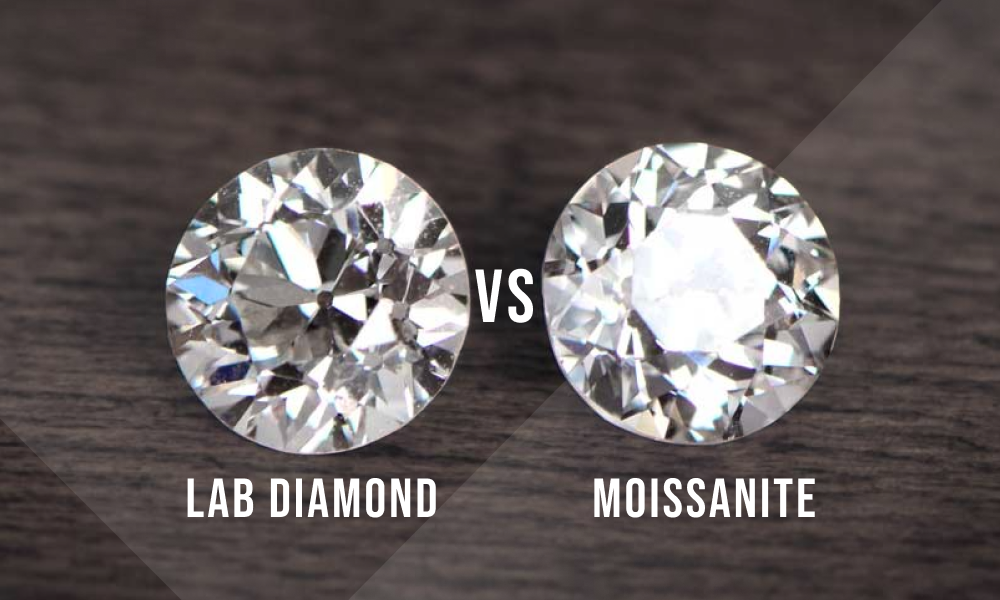


Roughly 80% of all mined diamonds end up in industrial drills and cutting tools, never once touching a jewelry box. You have probably always thought diamonds are rare, but that perception is more constructed than real. Millions of carats are mined every year, yet marketers have carefully shaped their image as scarce and ultra-precious.
This is just one of many fascinating diamond facts that show how these sparkling stones are scientifically remarkable, as well as culturally complex. Diamonds are among the most studied minerals on Earth, yet they are also some of the most misunderstood.
From how they form deep within the planet to how they became symbols of love, wealth, and status, there’s much more to diamonds than meets the eye.
In this guide, we’ll explore 50+ fun, cool, and interesting facts about diamonds, from science and history to myths, pricing, and surprising truths. Whether you’re curious about how diamonds form or just love a bit of diamond trivia, you will find that diamonds are far more complex than they first appear.
Get the same brilliance as diamonds for 60 to 80% less
Shop Moissanite CollectionSummary: Quick Diamond Facts
Only about 20% of mined diamonds are gem quality.
Diamonds are the only gemstones made of a single element.
The word "carat" comes from carob seeds.
Diamonds can be yellow, blue, pink, green, black, and red.
Red diamonds are the rarest color.
Diamonds can fluoresce under UV light.
The first lab-grown diamonds were created in 1954.
Diamonds can burn at ~700°C in oxygen.
Diamonds slowly convert into graphite over time.
Diamonds conduct heat up to 5x better than copper.
Diamonds are often found in kimberlite pipes.
Some diamonds contain materials older than Earth's crust.
Diamonds are used in audio equipment due to their stiffness.
The Hope Diamond weighs 45.52 carats.
Diamonds are measured in carats, not grams.
Most industrial diamonds today are synthetic.
Diamonds can form in space and meteorites.
Nanodiamonds have been found in meteorites.
Diamonds do not melt; they burn into CO₂.
Diamonds are in a metastable state at Earth's surface.
Basic Diamond Facts: What Is a Diamond?
Before moving further, it helps to understand what diamonds actually are, how they form, and why they stand apart from other gemstones.
The Science of What a Diamond Is
At its core, a diamond is made of just one element: carbon. But what makes it extraordinary is how those carbon atoms are arranged.

Mohs Hardness Scale
10/10
The Hardest Naturally Occurring Substance on Earth
Diamonds score a perfect 10 on the Mohs hardness scale, outranking every other natural material.
Cubic Crystal Structure
Carbon atoms form a rigid three-dimensional crystal lattice, the source of their unmatched strength.
Excellent Heat Conductor
Among the best thermal conductors on Earth, even better than metals like copper.
Electrical Insulator
Acts as an electrical insulator in pure form, despite incredible thermal performance.
Broad Spectrum Transparency
Transparent across a wide spectrum, from ultraviolet to far infrared wavelengths.
Refractive Index ~2.42
A high refractive index gives diamonds their exceptional brilliance and unmistakable sparkle.
The "Fire" Effect
Diamond "fire" comes from light dispersion splitting white light into spectral colors.
Did you know? The next hardest commonly known gemstone, moissanite, is only slightly lower in hardness on the Mohs scale.
Key insight: It’s not the material itself, but the atomic structure that makes diamonds so extraordinary.
How Diamonds Are Formed
Diamonds are formed under extreme conditions deep within the Earth.
Stage 1
Formation Begins
1B to 3.3B years ago
Deep mantle, extreme heat and pressure
Stage 2
Sits in Mantle
Millions of years
Stable under Earth's crust
Stage 3
Kimberlite Eruption
Relatively recent
Volcanic pipes push diamonds upward
Stage 4
Discovery and Mining
Last few centuries
Mostly India, then Brazil, then Africa
Stage 5
Cutting and Polishing
Days to weeks
57-58 facets for standard round cut

🌍 Earth's Surface
140–190 km
(87 to 118 miles)
🔥 Diamond Formation Zone
Most natural diamonds originate at depths of 140 to 190 kilometers beneath Earth's surface, deep within the mantle.
Ingredient 1
Extreme Pressure
Crushing forces from kilometers of overlying rock compress carbon atoms into the diamond lattice.
Ingredient 2
Over 1,000°C
High temperatures from Earth's mantle drive the chemistry that locks carbon into crystal form.
Transport
Kimberlite Pipes
Volcanic eruptions push diamonds upward through deep kimberlite pipes to where they can be mined.
Diamond Age
1 to 3.3 Billion Years
Scientists estimate that most diamonds formed 1 billion and 3.3 billion years ago, making them older than many life forms on Earth.
Alternative Origin
Not All Diamonds Come From the Mantle
Some diamonds form during meteorite impacts, where the sudden extreme pressure of cosmic collisions crystallizes carbon in an instant.
Key insight: Diamonds are not just rare; they are ancient geological time capsules.
Information About Diamonds: Key Physical Properties
Here’s a quick overview of the essential physical properties that define diamonds:
Chemical Composition
Pure carbon (C)
Crystal Structure
Cubic (isometric)
Hardness
10/ Mohs
Density
~3.5g/cm³
Thermal Conductivity
Higher than copper
Electrical Conductivity
Very low (insulator)
Transparency
UV to infrared
Refractive Index
~2.42gives brilliance
Formation Depth
140–190 km below surface

Section Takeaway
What You Need to Remember
Diamonds are made of carbon arranged in a powerful crystal structure.
Their hardness, brilliance, and durability come from this structure, not rarity alone.
Most diamonds are billions of years old and formed deep inside the Earth.
Diamonds represent one of nature's most extraordinary combinations of simplicity and strength.
Fun Facts About Diamonds Most People Do Not Know
Diamonds do not just make great gifts; they are full of surprises themselves.
Diamonds Can Burn
It may sound unbelievable, but diamonds, despite being incredibly hard, can actually burn.

Diamond Burn Point
700°C
(1,292°F) in oxygen
A diamond will begin to burn at around 700°C in the presence of oxygen.
Just Carbon
Diamonds are made of carbon, just like coal or graphite, which means they are combustible under the right conditions.
Pure Oxygen = Faster Burn
In pure oxygen environments, diamonds can burn at even lower temperatures because combustion is more efficient.
No Melt, Just Vanish
A burning diamond doesn't melt. It oxidizes into carbon dioxide (CO₂) and disappears entirely.
Diamond
Pure carbon
700°C + O₂
CO₂
Gone forever

Key insight: Diamonds are long-lasting, but not truly eternal. They are just incredibly slow to change.
The Largest Diamond in the Solar System
One of the most fascinating pieces of diamond trivia comes from outer space.

Diameter
4,000km
≈ 2,500 miles across
Estimated Mass
10 Billion
Trillion Trillion
Carats
For scale: The largest diamond ever found on Earth (the Cullinan) is 3,106.75 carats. BPM 37093 is roughly 3 trillion trillion times heavier.
Key insight: Diamonds aren’t just found on Earth; they can form on a cosmic scale.
Diamonds Have Been Found in Meteorites
Diamonds don’t only form deep inside Earth; they can also come from space.
Microscopic
Nanodiamonds
Tiny diamonds known as nanodiamonds have been found in meteorites. They're believed to form during stellar explosions or high-pressure cosmic events.
Impact Born
Canyon Diablo Meteorite
The famous Canyon Diablo meteorite contains thousands of microscopic diamonds created by the intense pressure of impact.
Rare Black
Carbonado Diamonds
Found in Brazil and the Central African Republic, these rare black diamonds may also have extraterrestrial origins.
Key insight: Some diamonds are literally older than Earth and formed in space.
You Can Make a Diamond from Human Ashes
Modern technology has made it possible to create diamonds from human remains.
Memorial Diamonds
From Carbon to Keepsake
Modern technology can now turn the carbon in human ashes into real diamonds, preserving a loved one's memory in a form that lasts.
The Process
HPHT Technology
After cremation, technicians extract carbon from ashes and transform it into a diamond using High Pressure High Temperature (HPHT) technology.
Same Composition
Chemically Identical
These diamonds are chemically identical to natural diamonds, with the same crystal structure and physical properties.
The Meaning
A Personal Memorial
Companies increasingly use this process to create memorial diamonds, offering a deeply personal way to preserve a loved one's memory.
Key insight: Diamonds are not just natural; they can also be deeply personal and symbolic creations.
Section Takeaway
What You Need to Remember
Diamonds can burn, change, and even form in space.
They are not as permanent or simple as they seem.
Modern science allows us to create diamonds from unexpected sources, even human remains.
Cool Facts About Diamonds and Their History
Diamonds have not always been decorative gemstones. For thousands of years, they served as symbols of power, mystery, and status. From ancient India to modern advertising campaigns, the story of diamonds is deeply tied to human culture, trade, and belief systems.
The First Diamonds Were Found in India
For much of human history, all known diamonds came from a single place: India.
Brazil
Diamond discoveries in Brazil broke India's millennium-long monopoly for the first time in history.
South Africa
Massive deposits dramatically increased global supply, transforming diamonds into a worldwide commodity.
Key insight: India shaped the early history of diamonds, but later discoveries turned them into a global commodity.
The Diamond Engagement Ring Tradition Is Relatively Recent
Many people assume diamond engagement rings are an ancient tradition. However, they’re actually quite modern.

📉 Before the 20th Century
<10%
of engagement rings featured diamonds
The diamond engagement ring "tradition" is barely a century old. Here's how it was built.
The Slogan
"A Diamond is Forever"
De Beers launched the now-iconic "A diamond is forever" slogan that would change engagement rings worldwide.
The Result
The New Default
Experts widely regard this campaign as one of the most successful marketing efforts in history, making diamonds the default choice for engagement rings.
The Escalation
"Two Months' Salary"
De Beers popularized the idea that people should spend two months' salary on a ring, another marketing-driven concept.
Key insight: The emotional value of diamonds is largely shaped by modern advertising rather than ancient tradition.
Looking for the perfect engagement rings? IceCartel made a guide to choose the perfect engagement ring for you.
Diamonds Were Once Used as Medical Tools
Diamonds have long been associated with healing and protection, though not always in ways we’d consider safe today.
Then
Ancient Medicine
Ancient Indian (Hindu) texts mention diamonds being used for spiritual and healing purposes.
In some historical practices, people believed ground diamond powder could cure illnesses. In other cases, they used it as a poison.
Now
Modern Medicine
Synthetic diamonds are used in precision surgical tools.
They're also used in ultrasound equipment and advanced medical devices due to their hardness and thermal properties.
Key insight: Diamonds have moved from mystical remedies to high-precision scientific tools.
The Word Diamond Comes from Ancient Greek
Even the name “diamond” reflects how people have viewed these stones for centuries.
📖 The Origin of the Word
ADAMAS
Ancient Greek
"Unconquerable" • "Invincible"
The word comes from the Greek term "Adamas," capturing the ancient belief in diamonds as indestructible.
Ancient Greek
Adamas
The original word meaning "unconquerable."
Roman Latin
Adopted by Romans
The Romans adopted the Greek term and carried it forward.
Old French
Through Latin
The term continued evolving through medieval Old French.
Modern English
Diamond
The form we know today, still echoing its ancient meaning.
Name meets meaning: The name perfectly captures the ancient belief that diamonds were indestructible and powerful, a reputation that's followed them for over 2,000 years.
Key insight: From language to legend, diamonds have always been associated with strength and permanence.
Section Takeaway
What You Need to Remember
Diamonds have a rich history shaped by trade, culture, and marketing.
India was the original source of diamonds for centuries.
Modern traditions, like engagement rings, are surprisingly recent.
Their meaning has evolved, from mystical objects to symbols of love and advanced tools.
Diamonds are not just geological wonders; they are deeply woven into human history and culture.
Interesting Facts About Diamonds in Science and Technology
Diamonds today are far more than luxury gemstones. In fact, most diamonds never make it into jewelry at all. Modern science and industry rely on diamonds for their extreme hardness, thermal properties, and distinctive atomic structure. These properties make them essential in everything from drilling to quantum computing.
So, here’s some diamond statistics and facts that you will surely find fascinating.
Industrial Diamonds: More Common Than You Think
One of the most overlooked diamond facts is that the majority of diamonds are not used in jewelry.

🏭 Industrial vs Gem Quality
80%
of mined diamonds lack gem quality
Most diamonds never touch a jewelry box. They serve industrial purposes instead.
⚙️ Industrial Uses
Abrasives
Used in cutting, grinding, and polishing tools across industries.
Drill Bits
Diamond-tipped drill bits power mining and oil exploration operations.
Precision Tools
Precision tools for shaping hard materials with exact tolerance.
🔬 Advanced Applications
High-Pressure Scientific Equipment
Diamonds withstand pressures that would shatter every other material in the lab.
Laser Systems
Diamond windows can withstand extreme conditions inside laser systems.
Lab over mine: Most industrial diamonds today are lab-made, not mined. Synthetic production has overtaken natural sources for industry uses.
📉 Global Production Drop
Likely reflecting the disruption caused by the global pandemic.
Diamond Uses Across Industries
Mining & Drilling
Diamond-tipped drill bits
Construction
Cutting and grinding tools
Medicine
Surgical tools, ultrasound equipment
Electronics
Semiconductor research, heat sinks
Space Exploration
Protective windows, heat shields
Computing
Quantum computing via NV centers
Audio Equipment
Speaker components due to stiffness
Key insight: Diamond supply is highly concentrated. Just two countries, Russia and Botswana, together account for over 56% of all carats mined globally.
Synthetic Diamonds: Fact vs. Fiction
Lab-grown diamonds have transformed the diamond industry in recent years.

Scientific Fact
Synthetic Diamonds Are Identical to Natural Diamonds
Same atomic structure. Same brilliance. Same hardness.
HPHT
High Pressure High Temperature
Replicates the extreme pressure and heat conditions deep inside Earth's mantle that naturally form diamonds.
CVD
Builds diamonds layer by layer from a carbon-rich gas inside a controlled chamber.
Official Recognition
FTC Says: "Real Diamonds"
The Federal Trade Commission (FTC) updated its guidelines, confirming lab-grown diamonds can be described as "real diamonds."
💰 The Price Difference
Cheaper Than Mined Diamonds
Same diamond. Same brilliance. Fraction of the price.
Lab Diamonds
No Mining Required
Avoid mining and the land disruption it causes.
Require significant energy use to produce.
Mined Diamonds
From the Earth
Involve land disruption from extraction operations.
Environmental practices vary widely by operator and region.
Natural vs. Lab-Grown Diamond Comparison
Key insight: Lab-grown diamonds are real, but their value and impact are still being debated.
But, IceCartel gives you insights for the history of lab grown diamonds. Be sure to check it out.
Diamond Semiconductors: The Future of Computing
Diamonds may play a major role in the future of electronics.
🔮 The Next Frontier
Diamonds as Semiconductors
Scientists are researching diamond as a semiconductor material that could outperform silicon in extreme conditions.
⚡ Why Diamond Works
Property 1
High Thermal Conductivity
Diamond moves heat away faster than nearly any other material, preventing chips from overheating.
Property 2
Extreme Condition Tolerance
Diamond keeps functioning where other materials fail, in heat, radiation, and high-voltage environments.
⚔️ Head-to-Head Showdown
Today
Silicon
Standard chip material
Tomorrow
Diamond
Higher voltage + heat tolerance
Diamond-based electronics could handle higher voltages and temperatures than silicon.
Backed by the Top Labs
NASA + DARPA Funding
Agencies like NASA and DARPA have funded research into diamond-based technologies.
Key insight: Diamonds could power the next generation of high-performance and quantum technologies.
Diamonds in Space Exploration
Diamonds are not just useful on Earth; they also play a role in space science.
🛰️ Practical Uses in Spacecraft
Protection
Protective Windows
Diamond windows withstand the extreme pressure and radiation that would destroy ordinary glass.
Precision
High-Performance Instruments
Diamond components power instruments that demand maximum accuracy under harsh space conditions.
In Research
Diamond Heat Shields
Scientists are exploring diamond-coated heat shields for better durability during atmospheric entry.
Key insight: Diamonds are not just on Earth; they may be forming deep inside distant planets.
Section Takeaway
What You Need to Remember
Most diamonds are used in industry and technology, not jewelry.
Lab-grown diamonds are reshaping the market.
Diamonds could play a role in future electronics and quantum computing.
They are even relevant in space exploration and planetary science.
Diamonds rank among the most versatile materials in modern science.
Diamond Trivia: Record-Breaking Stones and Surprising Numbers
Some diamonds do not just sparkle; they make history. These diamond facts highlight the biggest discoveries, highest prices, and some remarkable numbers behind the global diamond industry.
The Biggest Diamonds Ever Found
Some of the largest diamonds ever found include:

Cullinan Diamond
3,106.75
Carats
Discovered: 1905, South Africa
Remains the largest gem-quality rough diamond ever found.
Lesedi La Rona
1,109
Carats
Discovered: 2015, Botswana
One of the largest high-quality rough diamonds ever recovered.
Sewelo
1,758
Carats
Discovered: 2019, Botswana
The second-largest rough diamond ever found.
Key insight: Even today, massive diamonds are still being discovered, especially in Africa.
The Most Expensive Diamond Per Carat
Some diamonds do not just break size records; they break price records too. The Pink Star, for instance, sold for $71.2 million in 2017.
Here’s a quick comparison of some of the highest per-carat diamond prices:
| 💎 Diamond | Total Price | Weight | Per Carat |
|---|---|---|---|
| Pink Star | $71.2M | 59.6 ct | ~$1.19M |
| Oppenheimer Blue | $57.5M | 14.6 ct | ~$3.93M |
| Williamson Pink Star | $57.7M | 11.15 ct | ~$5.17M |
Note: All prices reflect public auction records. Market values fluctuate over time.
Key insight: Color, rarity, and demand drive record-breaking prices, not size alone.
Diamond Production Numbers
Behind the glamour of diamonds is a massive global industry.
⛏️ Annual Global Mining
Carats Mined Each Year
The world's diamond mines produce tens of millions of carats every year.
Russia
via ALROSA
Botswana
via Debswana
Canada
North America
Australia
Oceania
Market Size
Tens of Billions, Annually
The global rough diamond market commands tens of billions of dollars every single year.
Behind the glamour of diamonds is a massive, data-driven global industry. According to the Kimberley Process Certification Scheme (KPCS), which tracks an estimated 99.8% of global production:
In 2023, global diamond production totaled approximately 111.5 million carats, valued at roughly $12.7 billion.
| 🌐 Country | Ad Spend | Impressions (M) | CPM |
|---|---|---|---|
| 🥇 Russia | $3.6B | 37.30 | $97 |
| 🥈 Botswana | $3.3B | 25.10 | $131 |
| 🥉 Canada | $1.5B | 16.00 | $97 |
| Angola | $1.5B | 9.8 | $157 |
| Namibia | $1.2B | 2.4 | $517 |
| South Africa | $794M | 5.9 | $135 |
| Zimbabwe | $303.2M | 4.9 | $62 |
| Lesotho | $138.7M | 0.4717 | $294 |
| Sierra Leone | $102.5M | 0.5255 | $195 |
| DR Congo | $65M | 8.3 | $8 |
| Tanzania | $31.2M | 0.191 | $163 |
| Brazil | $24.9M | 0.0783 | $318 |
| Liberia | $17.6M | 0.0547 | $323 |
| Central African Republic | $11.7M | 0.1119 | $105 |
| Guyana | $10.9M | 0.0723 | $150 |
| Guinea | $9.7M | 0.12 | $81 |
| Ghana | $9.7M | 0.203 | $48 |
| Republic of the Congo | $320.2K | 0.0041 | $79 |
| Cameroon | $223.8K | 0.003 | $76 |
| Ivory Coast | $97.9K | 0.0024 | $41 |
| Mali | $55.4K | 0.000182 | $304 |
Key insight: Diamonds are not just rare gems; they are part of a huge global supply chain.
How Long Does It Take to Cut a Diamond?
Turning a rough diamond into a polished gem is a precise and time-intensive process.

Standard Round Brilliant Cut
57or58
Precision-Cut Facets
Each facet is engineered to maximize brilliance, refracting light to create the diamond's iconic sparkle.
Most Diamonds
Days to Weeks
For most diamonds, cutting and polishing takes several days to weeks of skilled labor.
Complex Stones
Significantly Longer
Larger or more complex stones require substantially more time, planning, and precision.
Cullinan Diamond
Years of Planning
The Cullinan Diamond required years of planning and cutting after its 1905 discovery. One misjudged strike could have shattered the largest gem-quality rough diamond ever found.
Key insight: A diamond’s beauty is not just natural; it’s the result of skilled craftsmanship and time.
Section Takeaway
What You Need to Remember
Some diamonds weigh thousands of carats and make history.
Record prices are driven by rarity, color, and demand.
The diamond industry produces millions of carats each year.
Cutting a diamond is a careful, time-intensive process.
Behind every diamond is a story of scale, value, and precision.
Fun Diamond Facts About Culture, Myths, and Symbolism
Diamonds have always meant more than their chemistry. For centuries, people have seen diamonds as symbols of power, protection, love, and even mystery. These ideas often say as much about human imagination as they do about the stones themselves. Here’s some interesting diamond facts you might find surprising.
Diamonds in Mythology and Folklore
Long before modern science explained what diamonds are, ancient cultures ascribed their own meanings to them.
Cupid's Diamond Arrows
Symbol: Unbreakable Love
Ancient Romans believed Cupid tipped his arrows with diamonds, symbolizing love that could never be broken once struck.
Indra's Vajra Thunderbolt
Symbol: Strength + Invincibility
In Hindu mythology, worshippers described Indra's thunderbolt weapon (Vajra) as made of diamond, representing strength and invincibility.
A Warrior's Talisman
Symbol: Protection + Courage
Protected warriors in battle.
Brought courage when worn on the left arm.
Key insight: Diamonds have long been associated with power, protection, and the supernatural.
Famous Diamonds and Their Alleged Curses
Stories of bad luck and tragedy also surround some of the most famous diamonds, although these claims are often exaggerated.

The Hope Diamond
45.52 carats
One of the best-known "cursed" gems, linked by legend to misfortune among its owners. Historians note, however, that newspapers sensationalized most of these stories.
The Koh-i-Noor
British Crown Jewels
Said to bring bad luck to male rulers. It is now part of the British Crown Jewels, and its history is tied to conquests and political power struggles.
The Black Orlov
Mysterious Origin
According to legend, it was stolen from a Hindu idol and later linked to multiple tragic events, though historians have not verified either claim.
Important note: Most “curse” stories are products of storytelling, marketing, and media hype, not proven facts.
Key insight: Diamond curses say more about human fascination with mystery than reality.
Diamonds in Pop Culture and Language
Diamonds have also played a major role in shaping modern culture, music, and language.
The Beatles
"Lucy in the Sky with Diamonds"
The famous Beatles song inspired the nickname "Lucy" for the diamond-like star BPM 37093.
Music Legend
Neil Diamond
Neil Diamond became one of the most successful musicians in history, further embedding the word "diamond" into pop culture.
Marilyn Monroe
"Diamonds Are a Girl's Best Friend"
The iconic song popularized by Marilyn Monroe helped cement diamonds as symbols of glamour and romance in postwar America.
Modern Era
Diamonds in Hip-Hop Culture
Symbol
Wealth & Success
In modern hip-hop, diamonds represent achievement, status, and arrival.
The Trend
"Icing Out"
The jewelry trend of covering pieces entirely in diamonds, transforming everyday items into status statements.
Key insight: Diamonds have evolved into powerful cultural symbols of status, love, and identity.
Section Takeaway
What You Need to Remember
Diamonds have inspired myths, legends, and cultural traditions across civilizations.
Many famous diamonds carry stories of curses and mystery, though often exaggerated.
In modern culture, diamonds symbolize love, wealth, and success.
Diamonds are not just physical objects; they are deeply woven into human stories and beliefs.
Shop iced-out moissanite chains, pendants, rings, and grillz that look like the real thing for a fraction of the price.
Shop Best SellersConclusion
Diamond facts about the science, history, and culture of diamonds reveal that they are far more than sparkling gemstones.
Geologically, they form deep within the Earth over billions of years, making them some of the oldest natural materials we can study.
Their signature crystal structure gives them exceptional physical properties, including unmatched hardness and high thermal conductivity, which is why scientists and engineers value them as much as jewelers do.
Historically, diamonds have shaped trade, power, and social traditions, from ancient India’s early mines to the global engagement ring culture we see today.
Meanwhile, record-breaking specimens highlight both their scale and rarity, while certain applications reveal how essential they are in industry. At the same time, their cultural footprint, from myths and folklore to music and modern symbolism, shows how deeply they are embedded in human imagination.
Diamonds occupy an unusual position: they are geological accidents, industrial tools, and cultural obsessions all at once.
Frequently Asked Questions
What are some interesting facts about diamonds that most people do not know?
Many people don’t realize that diamonds can burn at high temperatures, slowly converting into graphite over time, and are not as rare as often believed. Also, most diamonds mined are used for industrial purposes, not jewelry.
Are diamonds really the hardest substance on Earth?
Diamonds are the hardest naturally occurring material, ranking 10 on the Mohs scale. However, some lab-created materials can be harder, but among natural substances, diamonds still hold the top spot.
What is the rarest color of diamond?
Gemologists consider red diamonds the rarest, followed by blue and pink diamonds. These colors form due to rare structural changes or trace elements during formation.
Can diamonds be made in a lab?
Yes, manufacturers can produce diamonds using HPHT or CVD methods. Both processes yield diamonds that are chemically and physically identical to natural ones.
How long does it take for a diamond to form naturally?
Most diamonds formed between 1 billion and 3.3 billion years ago, deep within the Earth under extreme pressure and temperature conditions.
What are some fun facts about diamonds for kids?
Here are some fun facts for kids:
Diamonds are made from the same element as pencil lead (carbon).
They are the hardest natural material.
Some diamonds come from space.
They can be different colors, not just clear.
Are diamonds found in space?
Yes, diamonds have been found in meteorites, and scientists believe that some planets and stars may contain large amounts of diamond, including entire regions where “diamond rain” may occur.